The Price on the Tag Is Not the Real Price
A subsidy at the factory lowers the price in the country where the car is made.
Picture a woman named Joan, 59, who is comparing two electric cars. One costs US$25,000 and the other US$32,000. She assumes the first is the better value.
She may be right. She may also be looking at a price shaped by someone else's subsidy.
Subsidies move the tag
A subsidy is money from a government that lowers what a buyer or a maker pays. It can come in several forms, and each hides a different part of the cost.
| Place | What it does | Who pays |
|---|---|---|
| China | Electric cars were exempt from purchase tax in 2024 and 2025, up to CNY 30,000, then half the tax in 2026 and 2027 | Taxpayers, through lost revenue |
| China | 2026 trade-in subsidies: up to 12% of the price for scrapping an old car and buying an electric car, capped at CNY 20,000 | Taxpayers |
| United States | Federal electric car credit ended for cars acquired after 30 September 2025 | Taxpayers, until it ended |
| Norway | Electric cars are exempt from the one-time purchase tax | Taxpayers |
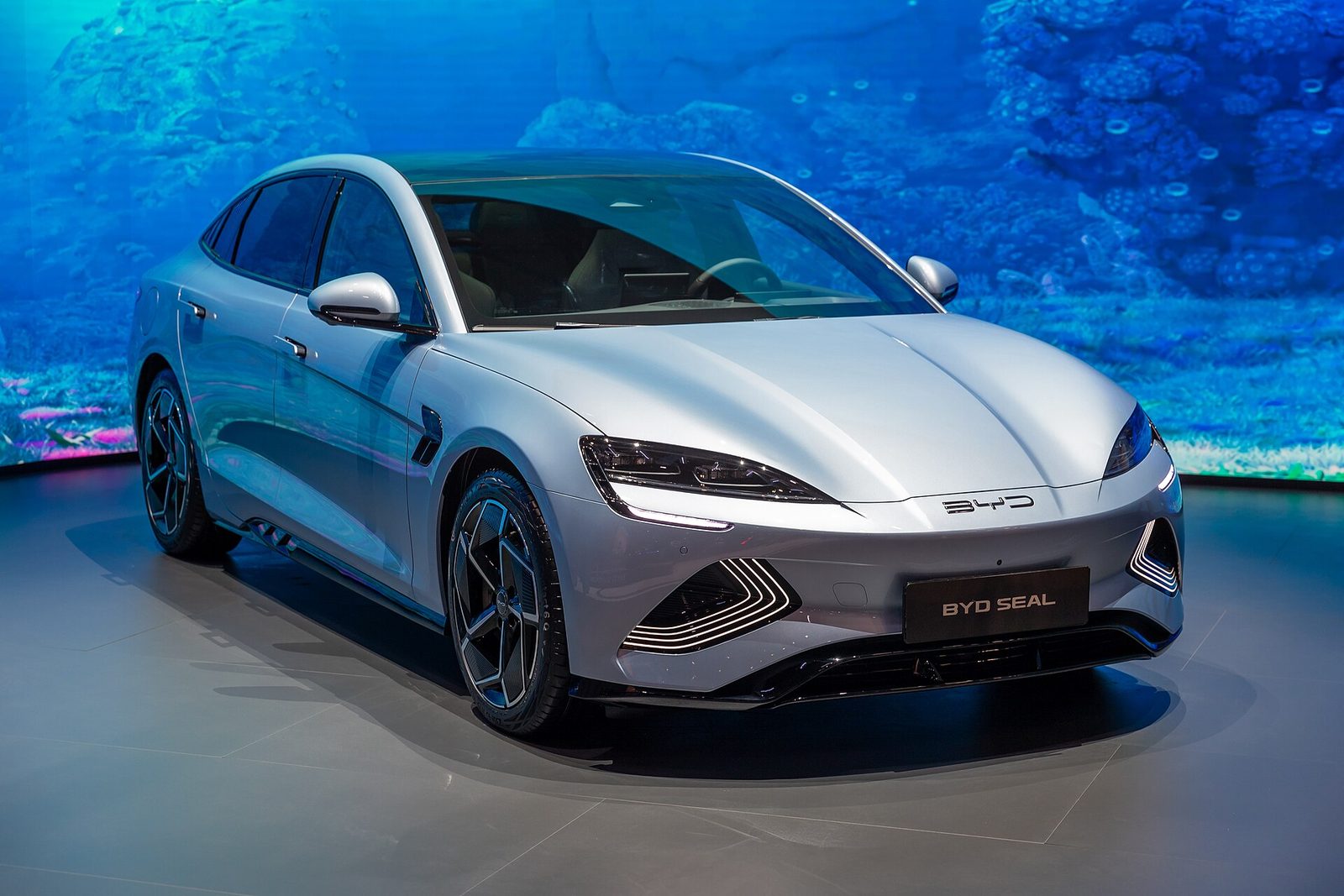
| European Union | Duties on Chinese electric cars: BYD 17.0%, Geely 18.8%, SAIC 35.3%, Tesla 7.8% (plus 10% standard) | Buyers, through higher prices |
The EU set these duties in October 2024 in response to what it described as subsidies to Chinese makers. People argue over whether that was wise.
Two directions
A subsidy at the factory lowers the price in the country where the car is made. A tariff in the country where it is sold raises the price. A buyer sees only the result.
When Joan looks at the two cars, she sees US$25,000 and US$32,000. She does not see that one price includes a purchase-tax exemption in another country, or that the other is raised by a duty.
What this means for a buyer
Prices in different countries are produced by different mixes of subsidies and duties. That helps to explain why one car can be a different price across the border. It also means prices in your own country may not be the "real" price of making the car.
You could…
-
Ask where a car is made and what the maker received from its government.
-
Check whether a credit or exemption applies to you.
-
Compare the tag with the cost over five years, including fuel, tax and resale value.
Did a subsidy or a tariff change a purchase for you? Tell us here. Another reader may be weighing the same one.
Sources: Chinese government announcement on purchase tax; CnEVPost on 2026 trade-in subsidies; IRS (EV credit); European Commission (duties, Oct 2024); Norwegian rules as summarized by a law firm. Figures are estimates for planning, based on public data.
Tell us in the comments